Schedule Free Exam
Posted on Sep 24, 2026
Image Credit: © Dreamstime.com
Share: 


 New Patient Forms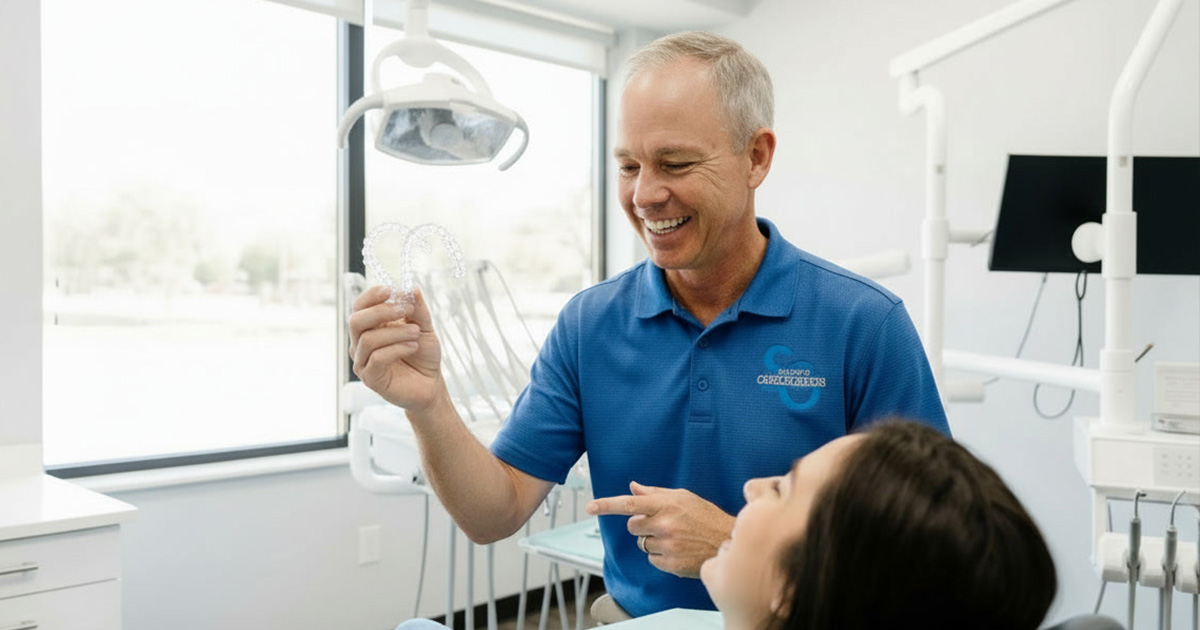
I get this question a few times a week, usually from an adult who has been staring at tray ads on their phone, or from a parent whose teen does not want metal. People type angel aligners into Google, see our name, and want a straight answer before they drive to Littleton, Centennial, or Aurora.
Here it is. Angel Aligners can work very well. They are not magic, and they are not the right tool for every bite I see. I would rather tell you that in the chair than start a tray sequence that was never going to finish the job.
I have been the orthodontist with my name on the door in Littleton since I finished specialty training at UCLA in 1992. I still design the movements. The brand on the plastic matters less than who is watching those movements month after month.
I look at three things before I ever talk about trays.
The bite has to be a good match. Mild to moderate crowding, spacing, and many overbite or crossbite patterns do well. A severe skeletal problem, a jaw that still needs to grow a lot, or teeth that have to move in a way trays cannot control, that is braces in my office. I will say so.
You have to wear them. Twenty to twenty two hours a day is not a suggestion. If you know you will leave them in a work bag, we should talk about braces instead. I would rather pick the appliance you will actually use.
You have to come in. Trays are removable. That does not mean treatment is unsupervised. I still want to see you on a regular cadence so I can check tracking, attachments, and the next set.
Teens can do this. Adults can do this. The 35 to 55 year old who had braces as a kid and watched things drift is a big part of my aligner chair. So is the high school junior who will wear the trays and keep up with sports. Age is not the filter. Honesty about wear time is.
The first visit is a conversation, not a sales pitch. You sit down. I look at your teeth, your bite, and the way your jaws meet. We take photos. We take a digital scan with our iTero scanner so neither of us is drowning in goopy impressions.
Then I tell you what I see. If Angel Aligners are a fit, I show you the staged movements on the screen. If they are not, I show you why, and we talk about braces or waiting. Families tell me that part is the relief. Nobody is trying to close you on a package before we have a plan.
If you want the clinical product page in writing, we already published Angel Aligners at our office. This article is the part that page cannot do: I am telling you how I decide.
Each tray is a small, planned step. I do not hand your scan to a lab and hope the default sequence is kind to your roots. I review the staging. Rotations, vertical moves, and teeth that like to tip too fast get extra attention. Attachments on the teeth are not decoration. They are handles so the plastic can actually grab.
You wear a set for about two weeks, then you move to the next. We check in so I can see whether the teeth are tracking. If a tooth lags, we fix the sequence. That is the whole point of having an orthodontist design this instead of ordering trays from a photo booth.
A lot of people arrive saying Invisalign because that is the word they know. I still treat some Invisalign cases. I do enough of that work to speak the language. Most of my clear aligner patients now wear Angel Aligners.
The reason is practical. I get precise control over the movements I care about, and I can keep the fee more accessible than the heavily branded national option. The plan I write is still mine. You are not buying a logo. You are hiring the person who will change the plan if a tooth stops tracking.
If you want the broader tray overview, start with our clear aligners page, then come back to the Angel Aligners details once we know you are a candidate.
The first tray is the one people remember. You will feel pressure. That is the point. It should not feel like a toothache you cannot think through. If it does, call the office. We check the attachment, the trim, and whether that tooth was asked to move too far in one step.
Talking changes for a day or two. Most people notice a slight lisp, then they forget it. Eating is the habit that actually has to stick. Trays come out to eat. You brush, or at least rinse well, before they go back in. Coffee and red sauce stay on the teeth, not in the plastic, if you keep that rhythm.
Attachments look like little tooth-colored bumps. They give the tray something to hold when a rotation needs more than a smooth surface. I place only the ones the movement needs. If one pops off, we put it back. Do not keep wearing trays around a missing attachment and hope the tooth still tracks.
Two weeks in, I care less about how the trays look in a photo and more about whether the teeth are sitting fully in the plastic. A gap at the edge of a tray is a tracking problem. We catch that in the chair, not six months later.
Some bites need a handle I cannot get from plastic, like a canine that is high and locked, a rotation past what a tray can hold, or a jaw relationship that will not finish with enamel-only movement. I would rather put braces on for those than grind through twenty trays and then tell you we have to start over.
Kids who still have a lot of growth left sometimes wait, or we use a different appliance first. Bone is still changing, and I will not pretend a tray sequence can outrun that.
If you already know you will not wear trays twenty hours a day, say so at the exam. Braces do not depend on you putting them back in after lunch. I would rather hear that on visit one.
Often, yes. Relapse is one of the most common reasons adults come in. I still have to see the bite. Crowding that came back is usually a great tray case. A bite that was never finished in the first round may not be.
It depends on the movements. Some cases finish in months. Others take longer because the teeth have more work to do. I would rather give you a range after the scan than invent a number in a blog.
Yes. Teeth have a memory. Trays straighten. Retainers keep. Skipping retainers is how we meet again in five years.
Call us. Do not skip ahead two sets and hope. We will tell you whether to wear the last set, the next set, or wait for a replacement.
They are usually more accessible in my office because I am not paying for that brand premium. I will quote your case after I see it. I do not publish a fake average.
Yes, with a mouthguard for contact sports and a habit of wearing the trays the rest of the day. If wear time collapses during the season, we pick a different appliance.
If you are on the fence, come in. The exam is complimentary. I will tell you whether Angel Aligners are the right tool, and I will tell you if they are not.
Request an appointment and come to Littleton, Centennial, or Aurora, whichever is easiest. If you want the longer version of who I am before you drive over, you can meet me on the doctors page first.
I like finishing cases. I like it even more when we pick the right appliance on day one.

Author - Dr. Scott Ohmart



Home | About Us | New Patients | Treatment | About Orthodontics | Invisalign® | Contact | Blog
Sitemap | Privacy Policy | Anti Spam Policy | Statement of Accessibility
Nothing contained on or offered by or through this website should be construed as medical advice and should not be relied upon for medical diagnosis or treatment. By accessing our website and submitting any contact information, you understand and agree to electronic communication by phone, voicemail, email, and/or text.
© Copyright Ohmart Orthodontics 2026 - Braces & Invisalign® in Aurora, Centennial and Littleton, CO.
Kaleidoscope® subsidiary: Orthopreneur® Internet Marketing Solutions